


Cancer Villanelle

Needles plunge. Consultants come and go.
Today, leukocytes are easy to locate;
tomorrow, next year, they may sink below.
Taxol drags at her heart. The drip, so slow,
eases on, flowing down her hand’s tight veins
as needles plunge and consultants come and go.
The nurses praise her husband’s constancy, though
he’s uneasy, each treatment — can he sustain
her, tomorrow or next year, if she sinks below?
The ward’s fish flit through a new tank, even though
the fatigued walls sag with the same diseased paint.
Needles plunge. Consultants come and go.
She still submerges, cold, forlorn. She knows
he’ll ease her to a surface of hours, days,
tomorrow. Next year, she might sink below.
Bloods, infections, bruises, vomit, soothing low
tones, fish rising in an easy ballet:
tomorrow, next year, all these could sink below
the needle’s plunge. Consultants come and go.
About this poem
This poem was included in Best Scottish Poems 2019. Best Scottish Poems is an online publication, consisting of 20 poems chosen by a different editor each year, with comments by the editor and poets. It provides a personal overview of a year of Scottish poetry. The editor in 2019 was Roseanne Watt.
Editor’s note:
The villanelle form perfectly captures a creeping sense of disempowerment through its repetitive refrains, where the dissolution of time is cleverly countered with the matter-of-fact monotony of treatment. I thought it was very deft that the third person speaker is able to embody the perspectives of both patient and loved-one; anyone who has experienced the awful reality of a cancer diagnosis, either themselves or through a friend or relative, will recognise its exhausting truth here, and the helpless reality it comes to occupy.
Author’s note:
I wrote ‘Cancer Villanelle’ at one of the lowest points in my life. The cancer wasn’t mine, thankfully, but the tight repetitive format reflected the downward spiral we all seemed to be trapped in. Many of the poems I wrote at this time looked at trauma from a variety of perspectives, particularly those of the helpless lookers-on, who kept grasping the small familiar details (fish tanks, vending machines) in an attempt to push back the terrifying unknowns.
Learn more

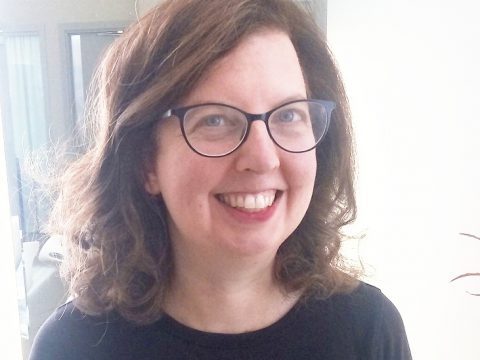
Tracey S. Rosenberg
Tracey S. Rosenberg grew up in the United States and now lives in Edinburgh. Her poetry has been widely published in journals and anthologies, including