


What Are You Reading? Our 50 Most-Visited Poems
29 July 2026
Every poem on our website has a life of its own once it leaves the shelf — some are visited a handful of times a year, others are read again and again, day after day. We recently took a look at a snapshot of visits across the site’s poem pages to see what readers are actually turning to, and the results are a lovely, slightly surprising mix of comfort reads, schoolroom favourites, and a few genuine curveballs.
A quick note on method: rather than publish raw visit counts, we’ve worked out each poem’s share of all the traffic captured in this snapshot, so you can see how they compare to one another. A poem near the top of the list might be read many times more often than one near the bottom — but all fifty are genuinely among the most-visited pages on the site.
Here’s what’s been keeping people reading.
The top 50
- The Peace of Wild Things — Wendell Berry (10.4% of top-poem traffic)
- The Guest House — Jalaluddin Rumi, trans. Coleman Barks (9.9%)
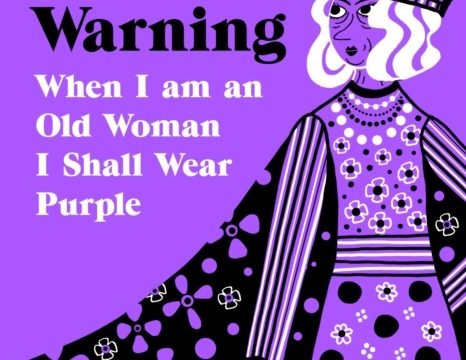
- Warning — Jenny Joseph (8.4%)
- Beannacht / Blessing — John O’Donohue (3.7%)
- Address to a Haggis — Robert Burns (2.5%)
- Tam o’ Shanter — Robert Burns (2.0%)
- To a Mouse — Robert Burns (1.6%)
- From a Railway Carriage — Robert Louis Stevenson (1.6%)
- Valentine — Carol Ann Duffy (1.5%)
- Mrs Midas — Carol Ann Duffy (1.5%)
- ‘Breathes there the man’ — Sir Walter Scott (1.4%)
- Epitaph on my own Friend — Robert Burns (1.4%)
- The Tay Bridge Disaster — William McGonagall (1.4%)
- He wishes for the Cloths of Heaven — W.B. Yeats (1.4%)
- The Masque of Anarchy — Percy Bysshe Shelley (1.3%)
- Medusa — Carol Ann Duffy (1.2%)
- The Fairies — William Allingham (1.1%)
- War Photographer — Carol Ann Duffy (1.1%)
- A Red, Red Rose — Robert Burns (1.1%)
- A Man’s a Man for a’ That — Robert Burns (1.0%)
- Lord Ullin’s Daughter — Thomas Campbell (1.0%)
- The Prelude (extract) — William Wordsworth (0.8%)
- Jabberwocky — Lewis Carroll (0.7%)
- To a Louse — Robert Burns (0.7%)
- Anne Hathaway — Carol Ann Duffy (0.7%)
- The Door — Miroslav Holub (0.7%)
- In Mrs Tilscher’s Class — Carol Ann Duffy (0.7%)
- Havisham — Carol Ann Duffy (0.7%)
- Sir Patrick Spens — Scottish anonymous (0.7%)
- Lochinvar — Sir Walter Scott (0.6%)
- Requiem — Robert Louis Stevenson (0.5%)
- Strawberries — Edwin Morgan (0.5%)
- The Cotter’s Saturday Night — Robert Burns (0.5%)
- Before You Were Mine — Carol Ann Duffy (0.5%)
- The Lamplighter — Robert Louis Stevenson (0.4%)
- Memorial — Norman MacCaig (0.4%)
- Hallaig — Sorley MacLean (0.4%)
- My Shadow — Robert Louis Stevenson (0.4%)
- The Twa Dogs — Robert Burns (0.4%)
- The Rime of the Ancient Mariner (extract) — Samuel Taylor Coleridge (0.4%)
- Mortality — William Knox (0.4%)
- Good Friday — Christina Rossetti (0.4%)
- I Opened A Book — Julia Donaldson (0.3%)
- The Morrow-bird — Kathleen Jamie (0.3%)
- A Man In Assynt (extract) — Norman MacCaig (0.3%)
- Originally — Carol Ann Duffy (0.3%)
- Here Lies Our Land — Kathleen Jamie (0.3%)
- For Oom Piet — Finuala Dowling (0.3%)
- The Owl and the Pussy-cat — Edward Lear (0.3%)
- The Second Coming — W.B. Yeats (0.3%)
A few things worth noticing
Comfort and reassurance lead the pack. Our single most-visited poem, Wendell Berry’s “The Peace of Wild Things,” along with Rumi’s “The Guest House” and John O’Donohue’s “Beannacht,” together account for a striking share of all top-poem traffic. All three were featured in our Tools of the Trade anthology for new doctors, and all three are the kind of poem people search out specifically when they need something steadying — a pattern that says as much about why people come to poetry as it does about the poems themselves.
Robert Burns is, unsurprisingly, everywhere. Eight of his poems appear in the fifty, from Burns Night stalwarts like “Address to a Haggis” and “Tam o’ Shanter” to the perennial classroom favourite “To a Mouse.” Carol Ann Duffy isn’t far behind, with nine poems on the list — nearly all of them, like “Mrs Midas,” “Valentine,” “Havisham” and “War Photographer,” widely set as SQA National 5 and Higher texts. Between them, Burns and Duffy make up more than a third of the entire list, a reminder of how much of our website’s traffic comes from students and teachers rather than casual browsers.
There’s a well-loved seam of Victorian and Romantic favourites too — Stevenson, Yeats, Coleridge, Shelley, Wordsworth, Rossetti — alongside a scattering of poems written for children, like “Jabberwocky,” “The Owl and the Pussy-cat” and Julia Donaldson’s “I Opened A Book.” And tucked in at numbers 44 and 47 are two of our own Best Scottish Poems anthology selections, Kathleen Jamie’s “The Morrow-bird” and “Here Lies Our Land” — good company for everything else on this list, even if they’re far outnumbered by it.